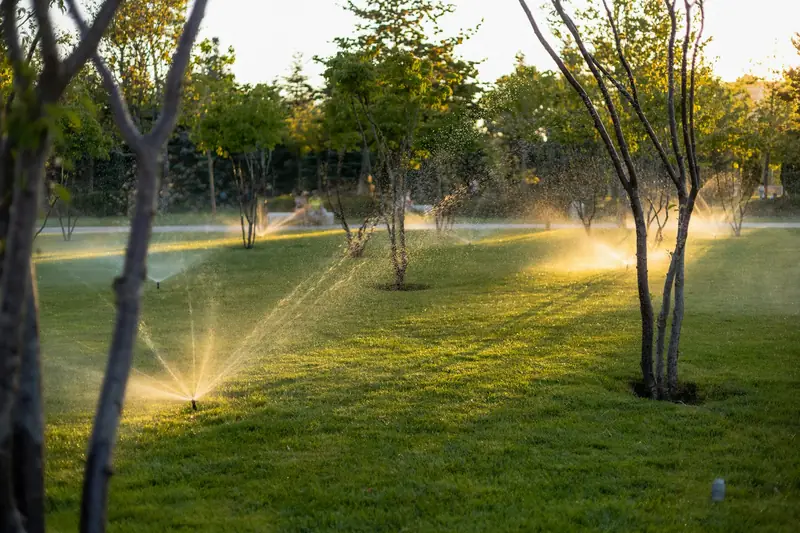
After a dry Highveld winter, most Benoni lawns are brown, thatchy and patchy. Spring (roughly September to November, once the frosts are over and the first rains arrive) is the time to fix that. Done right, a kikuyu lawn recovers within a few weeks.
Step 1: Mow low
Mow the lawn shorter than usual (but not down to bare soil) and remove the clippings. This makes scarifying easier.
Step 2: Scarify
Scarifying cuts out the dead runners and thatch that build up over winter, so water and fertiliser reach the roots.
- Kikuyu handles hard scarifying well.
- Buffalo (St Augustine) and LM grass need a gentler approach: rake out thatch rather than cutting deep.
- Rake up and remove everything the scarifier pulls out.
A powered scarifier makes this much faster; most garden services offer scarifying as a once-a-year extra. See what a garden service includes.
Step 3: Fertilise
Apply a lawn fertiliser at the rate on the bag, spread evenly (a spreader helps), and water it in straight away so it doesn't burn the grass.
Step 4: Top dress
Spread a thin layer of lawn dressing, about 1 cm, mainly over hollows and thin patches. Too thick and you'll smother the grass. Brush or rake it into the lawn so the tips of the grass still show.
Step 5: Water well
Water deeply two or three times a week until the new growth is established, unless the rains do it for you. Early morning is best. Check for any municipal water restrictions. See water-wise gardening and garden irrigation.
Patches that don't recover
If areas stay brown after a few weeks of growth elsewhere, look for other causes: lawn caterpillars, grubs, dog urine, deep shade or compacted soil. See kikuyu lawn brown patches, and tackle weeds early with our lawn weeds guide.
DIY or garden service?
A small lawn is a weekend job. For larger lawns, a garden service with a powered scarifier is quicker, and they'll remove the waste. Ask for scarifying, fertilising and top dressing to be quoted separately. See garden service prices in Benoni and our full lawn care calendar.